
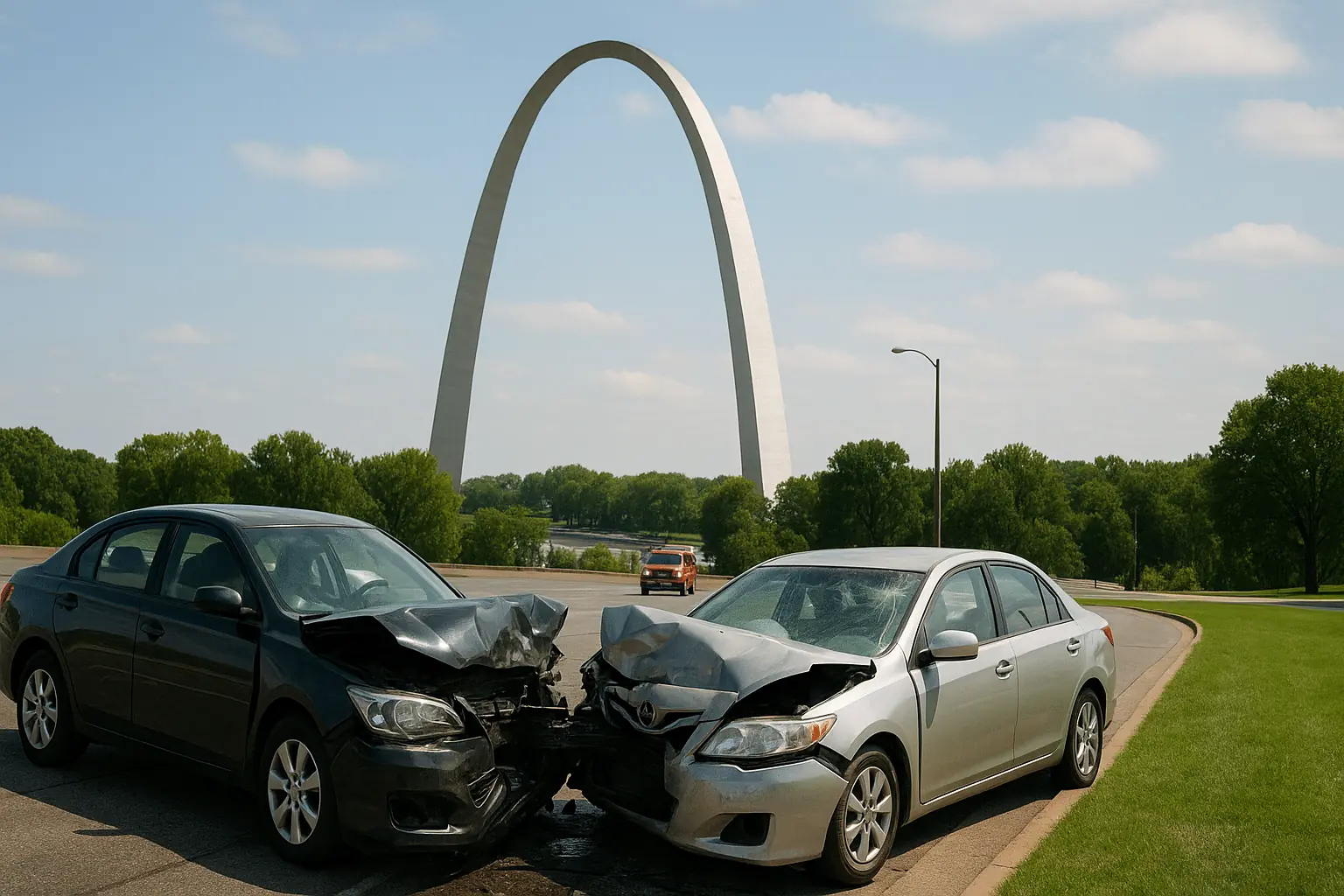
If you were just in a car accident in Missouri, the next few hours matter more than most people realize. As former insurance defense attorneys who spent years working for insurance companies, we know exactly what adjusters look for, what they hope you won’t do, and what evidence disappears fast. This guide walks you through every step.
Car accidents happen without warning. One moment you are driving down Highway 40, crossing an intersection in Chesterfield, or merging onto I-270, and the next, everything changes. What you do in the minutes, hours, and days after a crash can significantly affect your ability to recover full compensation for your injuries.
At Sotiriou Wilmowski Injury Law, we spent years on the other side of these cases. We defended drivers, trucking companies, and their insurers. We know how insurance adjusters evaluate claims, what they look for in police reports, how they use your statements against you, and why early action protects your rights.
Here is exactly what to do after a car accident in Missouri.
Step 1: Stay at the Scene and Make Sure Everyone Is Safe
Missouri law requires drivers involved in an accident to remain at the scene. Do not leave, even if the crash appears minor and you feel fine.
- Check yourself for injuries. Adrenaline can mask pain, so do not assume you are unhurt just because you feel okay.
- Check on passengers in your vehicle and the other car.
- If anyone is injured or there is significant property damage, call 911 immediately.
- Move to a safe location away from traffic if possible, but do not leave the scene entirely.
Under Missouri law (RSMo § 577.060), leaving the scene of an accident that resulted in injury or death is a felony. Even if no one is seriously hurt, leaving can be a misdemeanor and will destroy your credibility in any future claim.
Step 2: Call 911 and Get a Police Report
Always call the police, even for minor accidents. A police report is one of the most important pieces of evidence in a personal injury claim.
- Tell the officer what happened factually and calmly.
- Do not speculate about fault or say things like “I didn’t see them” or “maybe I was going too fast.”
- Ask for the officer’s name and badge number.
- Get the report number before the officer leaves so you can obtain a copy later.
In Missouri, crashes resulting in injury, death, or property damage over $500 must be reported. The Missouri State Highway Patrol maintains accident records that your attorney can use to build your case.
What the insurance company will do with the police report: Adjusters read police reports carefully. They look for any language suggesting you were at fault, any inconsistencies with your later statements, and any indication you were impaired or distracted. A detailed, factual report from the officer helps protect your claim.
Step 3: Document Everything at the Scene
If you are physically able to do so, gather as much evidence as possible while you are still at the scene. Evidence disappears quickly: skid marks fade, witnesses leave, and memories blur.
Photos and video: Take photos of all vehicles involved from multiple angles. Photograph the entire accident scene, including the road, intersection, traffic signals, signs, and skid marks. Take photos of your injuries, even if they appear minor. Use your phone to record a brief video of the scene.
Witness information: Ask any witnesses for their name, phone number, and what they saw. If witnesses seem reluctant to get involved, simply ask for their contact information.
Other driver’s information: Name, address, phone number, driver’s license number, insurance company name and policy number, license plate number, vehicle make, model, and year.
Step 4: Seek Medical Attention, Even If You Feel Fine
Go to the emergency room or urgent care that day. Do not wait until the next day.
Many serious injuries do not cause immediate pain. Herniated discs, traumatic brain injuries, internal bleeding, and soft tissue damage can take hours or days to produce symptoms. If you delay treatment, the insurance company will argue that your injuries were caused by something else, not the accident.
What insurance adjusters do with medical records: They compare the date of the accident to the date of your first medical visit. A gap of even a few days gives them grounds to argue your injuries were pre-existing or unrelated to the crash. We have used this exact argument against injury victims when we were on the defense side. Now we fight back against it on your behalf.
Step 5: Do Not Talk to the Other Driver’s Insurance Company
After a crash, the at-fault driver’s insurance company will contact you quickly. Their goal is not to help you: it is to minimize what they pay.
- Do not give a recorded statement. You have no obligation to give a recorded statement to the other driver’s insurer.
- Do not accept any payment or settlement offer without speaking to an attorney first.
- Do not discuss fault, your injuries, or your medical history.
- Do not sign any documents from the other driver’s insurer.
Your only obligation is to provide your name and insurance information to the other driver. Everything else should go through your attorney.
Step 6: Report the Accident to Your Own Insurance Company
Missouri law and your insurance policy likely require you to report the accident to your own insurer. Report the fact of the accident and the date, time, and location, but do not provide a recorded statement without speaking with an attorney first. Do not admit fault.
If the at-fault driver is uninsured or underinsured, you may need to make a claim under your own UM/UIM coverage, which can be a critical source of compensation.
Step 7: Follow Your Doctor’s Treatment Plan
Consistent medical treatment is one of the most important things you can do for both your recovery and your claim. Attend every appointment, follow all recommendations, and keep track of how your injuries affect your daily life.
What happens if you skip appointments: The insurance company will argue that your injuries were not serious enough to warrant continued treatment, or that you failed to mitigate your damages. Both arguments reduce your recovery.
Step 8: Keep Records of Everything
From the day of the accident forward, maintain a file that includes all medical records and bills, documentation of missed work and lost wages, receipts for out-of-pocket expenses, and a daily journal describing your pain levels and limitations.
Step 9: Contact a St. Louis Car Accident Attorney
The sooner you contact an attorney, the better. Evidence preservation notices can compel businesses and municipalities to preserve surveillance footage before it is deleted. Black box data from modern vehicles can be overwritten. Witness memories are freshest immediately after a crash.
What Compensation Can You Recover After a Missouri Car Accident?
- Medical expenses: past and future, including emergency care, surgery, rehabilitation, and ongoing treatment
- Lost wages: income lost while you were unable to work, plus reduced future earning capacity
- Pain and suffering: compensation for physical pain, emotional distress, and loss of enjoyment of life
- Property damage: repair or replacement of your vehicle
- Loss of consortium: compensation for the impact on your relationship with your spouse
- Punitive damages: in cases of extreme recklessness such as drunk driving
Missouri follows a pure comparative fault rule, you can recover even if you were partly responsible. Your compensation is reduced by your percentage of fault. If you were 20% at fault and your damages total $100,000, you can recover $80,000.
Common Mistakes to Avoid
Posting on social media. Anything you post after an accident can be used to dispute your injuries. Avoid posting or adjust your privacy settings until your case is resolved.
Waiting too long to see a doctor. Delayed treatment creates gaps that insurers exploit.
Accepting the first settlement offer. Early offers are designed to close your case before the full extent of your injuries is known. Once you sign a release, you cannot go back.
Talking too much. Less is more. Stick to the facts with law enforcement and do not discuss your case with anyone other than your attorney.
Missouri’s Statute of Limitations
Missouri law gives you five years from the date of the accident to file a personal injury lawsuit (RSMo § 516.120). However, do not treat this as a reason to wait. Evidence degrades, witnesses become unavailable, and insurance policies can lapse.
Why Sotiriou Wilmowski?
We are former insurance defense lawyers who spent years on the other side of these cases. We know how adjusters think, what arguments they will make, and where they look for weaknesses in your claim. That insider knowledge shapes everything we do.
We handle serious car accident cases throughout Missouri and Illinois, including St. Louis City and County, St. Charles County, Jefferson County, and into Southern Illinois. We charge nothing unless we win.
If you were hurt in a car accident, contact us today for a free consultation. We are available 24/7.
Call us: 314-925-1000
Sotiriou Wilmowski Injury Law | 12444 Powerscourt Drive, Suite 150, St. Louis, MO 63131
This article is for general informational purposes only and does not constitute legal advice. Every case is different. Contact a licensed attorney to discuss the specific facts of your situation.