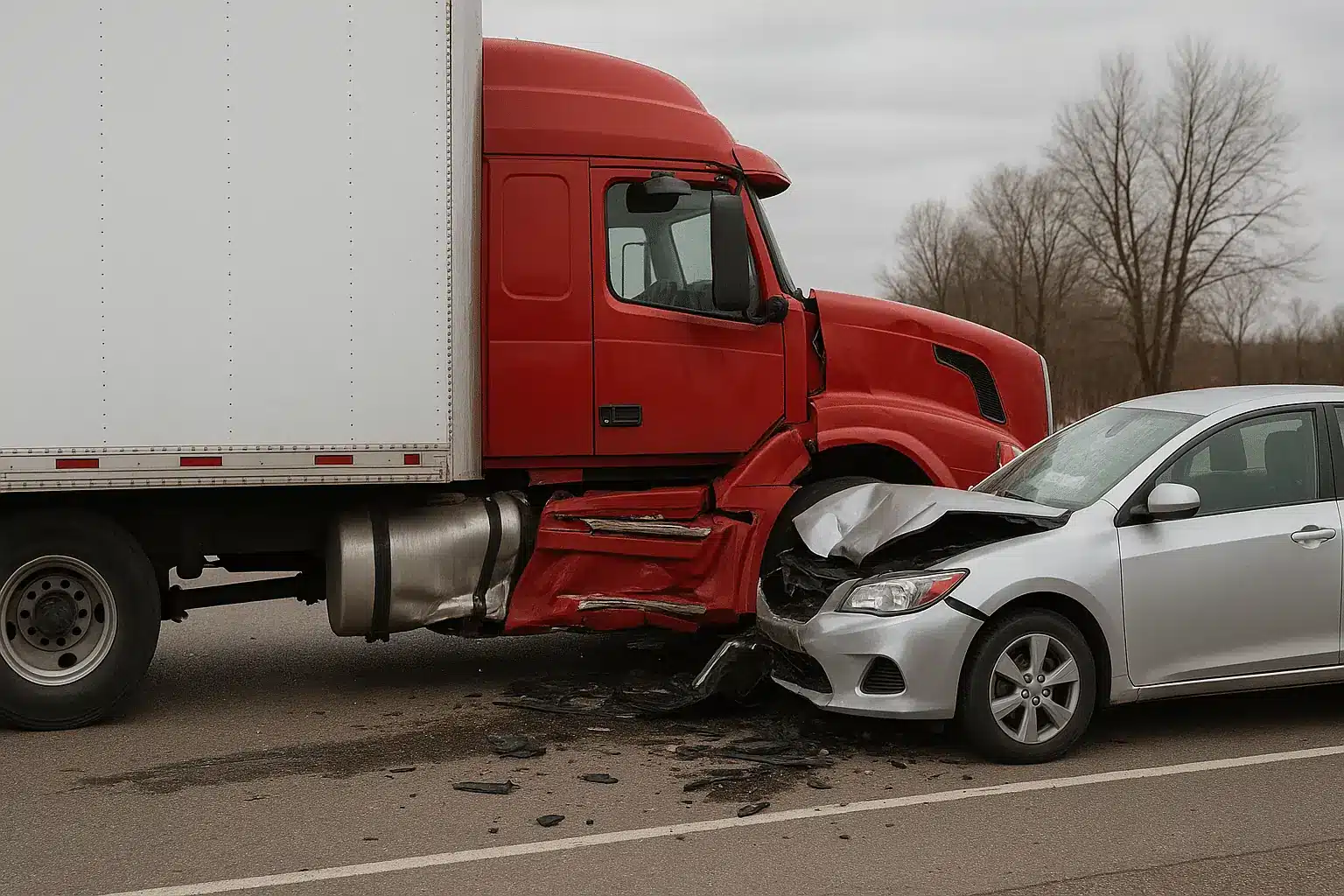

While you are still in the emergency room, the trucking company is already working your case. This is not an exaggeration for effect. Major carriers and their insurers operate rapid response programs, and within hours of a serious crash on I-70, I-44, or I-270, a team can be en route: an adjuster, a defense lawyer, and an accident reconstructionist. We know how these teams operate because we used to be part of that world. Here is what happens in the first 48 hours after a Missouri truck accident, and why those hours matter so much to your case.
The Rapid Response Team
The defense team’s job in the first two days is to control the narrative and the evidence. They photograph the scene before skid marks fade, interview their driver before anyone else can, and begin building the version of events the insurer will defend for the next two years. There is nothing illegal about any of this. It is simply what a well-funded defendant does, and it is why the injured person cannot afford to wait weeks to act.
The Evidence That Can Disappear
Truck cases are won and lost on evidence that does not exist in an ordinary car accident, and much of it has a shelf life. Federal rules require carriers to keep electronic logging device records, the digital logs of the driver’s hours, for only six months. Dashcam and terminal camera footage is often overwritten in days or weeks. The truck’s engine control module, its black box, records speed, braking, and throttle data that can be lost if the truck is repaired or sold. Driver qualification files, drug and alcohol testing records, dispatch communications, and maintenance logs all have retention limits too. Once the clock runs out, that evidence is gone, and with it, often the proof of what really happened.
The Spoliation Letter: Freezing the Evidence
The single most important early move in a truck case is a preservation demand, often called a spoliation letter. It is a formal notice to the carrier and its insurer identifying every category of evidence they must preserve: ELD data, ECM downloads, camera footage, the driver’s personnel and testing files, maintenance records, dispatch and satellite communications, and the truck itself. Once a carrier receives that letter, destroying or losing the evidence carries real legal consequences, including sanctions and adverse inference instructions at trial. Send it in week one and the playing field changes.
Why Truck Cases Are Different From Car Cases
A truck accident case is not a big car accident case. The defendant is regulated by the Federal Motor Carrier Safety Administration: hours-of-service rules limit driving to 11 hours within a 14-hour window, drivers are subject to drug and alcohol testing, and interstate carriers must hold at least $750,000 in liability coverage, with many carrying far more. There are also usually more defendants than you would guess: the driver, the motor carrier, sometimes a broker, a shipper, or a maintenance contractor. More regulation means more ways to prove negligence, but only if the evidence survives long enough to be examined.
What You Should Do in the First 48 Hours
Get medical care and follow through on it. Do not speak with the trucking company’s insurer or sign anything they send. Preserve what you can: photos, witness names, your own dashcam footage if you have it. Then get a lawyer involved fast, not because lawyers like urgency, but because the defense team is already working and the preservation clock is already running. We’ve written a fuller checklist in our guide on what to do after a truck accident in Missouri.
Frequently Asked Questions
How long is the truck’s electronic log data kept?
Federal regulations require motor carriers to retain ELD records for six months. After that, carriers can lawfully delete them unless a preservation demand or litigation hold is in place, which is why early action matters more in truck cases than almost any other injury claim.
What is in the truck’s black box?
The engine control module typically records vehicle speed, brake application, throttle position, and hard-braking events around the time of a crash. A proper forensic download can reconstruct the final seconds before impact with remarkable precision.
The trucking company’s insurer already offered to pay my medical bills. Should I take it?
Be careful. Early payments and early offers in truck cases are almost always paired with releases or recorded statements designed to limit what you can recover later. Have a lawyer read anything before you sign it.
If you or a family member was hurt in a truck crash anywhere in the St. Louis metro area, the first 48 hours are not too early to call. They may be the most important hours of your case. The consultation is free, and we handle truck cases on a no-fee-unless-we-win basis.